Tuesday, February 9, 2010

Ode to Cynthia


Ode to Cynthia

By Israel Shamir

Things must be bad indeed if a woman steps forward to the line of fire. Nature arranged that a woman does not court danger unless her land and her folks are in real trouble. But when she does, she teaches men a lesson of manly behaviour.

When France was fading away, a shepherd girl Jeanne d’Arc took a heavy sword and led the flower of French nobles to assault the walls of Orleans. When cities of Republican Spain was strafed by the Nazi Luftwaffe, it was a woman, Dolores Ibarruri, La Pasionaria, who said to her people: it is better to die tall, than to live on your knees. In 1990, when Mikhail Gorbachev led his country to disaster and disintegration, a year before the wealth of Russia was embezzled in privatisation spree, only one person has dared to raise her voice against the dictator in the parliament. She was the indomitable Sashie Umalatov, an MP from the Chechen Mountains.

Now it is the turn of the US to feel the chilly wind of eternity on its face. It came from unexpected direction. People of America became hostage in the hands of a few men with too many dollars in their pockets and endless greed in their hearts. For millennia, the difference of income, education, and standard of living was not so vast in one land. The wealth of the nation could provide every American with a superb education, perfect medical care, happy childhood, secure old age, guaranteed home, and free time to open one’s mind to new thoughts and old friends. America could be on its way to the Golden Age of universal happiness and wisdom.

Instead of it, a small group of men squeezes the nation in order to add another billion to their coffers. They would surely destroy the US by their limitless greed. The devotees of Mammon, they are totally devoid of compassion to the people they live amongst. They do not see the local people as ‘their own kind’. If they want to show compassion, they send money to Israel. Out of five dollars American taxpayer gives for aid, four dollars land in the coffers of the Jewish state. They appear unstoppable, as the politicians are scared of them and docilely raise their hands and sign the pledge promising to send more money to Israeli generals. Support of Israel is not a foreign policy. It is the covenant of the Mammonites, and you sign it with blood. With Palestinian blood.

But one woman refused to sign the pledge. One woman, Cynthia McKinney, a member for Georgia, dared to refuse. Four hundred congressmen signed it; they preferred their own personal advancement to the good of the country. Ancestors of Cynthia were slaves in her native Georgia. But she is one of a very few free persons in the US Congress. As we Israelis were used to say about our Golda Meir, she is the only man over there. She is a black woman, but she is the whitest man of them all, they would say before the Politically Correct era. She knew the billions of Israeli aid are needed for the poor people of the United States, for her own Afro-American community. She wanted to uphold the sovereignty of the people and congress of the United States, in face of encroaching servility to the Jewish Lobby.

She is not alone. Another wonderful Afro-American congresswoman, Barbara Lee, cast the only vote against the slaughter in Afghanistan; John Conyers, Jessie Jackson Jr, and Maxine Waters supported the cause of Palestine on different occasions. Ron Paul of Texas voted against all-house resolution sending obsequious greeting to General Sharon. Nick Rahall, John Sununu, David Bonior did not bend.

Cynthia was just more outspoken in seeing the evil. She said , “There are many Members of Congress who want to be free. I am one of them. I wanted to be free to vote according to my conscience, but I had been told that if I didn't sign a pledge supporting the military superiority of Israel, no support would come my way. And sure enough, I didn't sign the pledge and no support came my way. I suffered silently year in and year out, because I refused to sign that pledge. And then, like a slave that found a way to buy his freedom... I went to work ... I wanted to be free ... Free to cast the votes in the United States Congress as I saw fit and not as I was dictated to”.

Now she stands for re-election, and her chances are dim, as the frightful AIPAC, the spearhead of the organised Jewish community, targeted her. They do not want to see independent and free congressmen on the Capitol Hill. Their huge financial might, network of connections in the media and universities are used to smother every free voice. They succeeded to unseat Earl Hilliard, another Black Congressman, who did not bow to Sharon, and now plan to do Cynthia in. If they succeed, the cause of freedom will suffer a huge setback. If she succeeds, the myth of Jewish omnipotence will evaporate, and America will look towards better days, as support or rejection of segregated Israel speaks volumes about true agenda of a candidate.

Cynthia is not ‘against Jews’, as there are many very good folks of Jewish origin. While the organised Jewish community implements quite a disgusting policy, in domestic and foreign affairs alike, there are wonderful outsiders, ‘the remnant of Israel’. Rejected by the community and rejecting it, they stand for integration in Palestine and in the US. Some of them have supported Cynthia’s campaign; another outsider manages her campaign. Through them, ‘you will be blessed by all people’, the Lord’s promise to Abraham is made true.

I am not sure whether Rabbi Michael Lerner, the editor of Tikkun, a “Progressive Jewish monthly” from California, will be equally blessed. Rabbi Lerner has spoken in support of Cynthia McKinney, but demanded in return to “call for Israel to be given either membership in NATO or a mutual defence pact with the U.S.” Such a support defeats its purpose. As if the military and political US backing of the racist Jewish state were not sufficient, Lerner wants to establish it in law. Cynthia openly spoke against hegemony of the Zionist Lobby, against Israel connection. Lerner offers to achieve the purpose of the Zionist lobby under pretence of fighting it. This sophisticated cunning is not unusual for crypto-Zionists, acting as deep penetration agents outside their milieu, and Lerner already has performed a similar task for the Zionists during Durban Conference . Next time, he will fight heroin addiction by demanding the drug to be sold in every shop. Cynthia and other congressmen should accept his offer of help for what it is worth, but reject his demand of political payoff to Zionists.

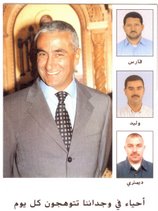
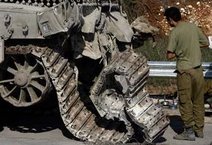
Cynthia’s is not a divisive voice of Blacks vs. Whites, nor Democrats vs. Republicans, neither Left against Right. She speaks for the people of the US against foreign interests. She is the congresswoman who dared to remind of the USS Liberty seamen, butchered by Israeli heavy machine guns and missiles. She reminded her audience of the last stand of Faris Ode, the brave Palestinian kid who faced the Israeli tank with a stone and was murdered. She stands against corporate greed. She stands for the nature deemed expendable by the Greedies.

This woman with a name from the love lyrics of Propertius, the delicate Greek poet, who called himself ‘a pale knight in thrall of my angry Cynthia’, is an all-American figure, brought forth by the spirit of America. The great country does not want to die. In such moments, the land calls for its sons and daughters to step forward to the line of fire. Cynthia heard the call. Support of Cynthia is the ultimate test of love to America, of belief in America’s future in the family of nations, as an equal and friendly nation, not as an enforcer for creed of Greed.

It is paramount to rally around her, as the French nobles rallied to Jeanne d’Arc. Whether you are a descendant of African slaves or Muslim immigrants, a son of Confederacy or a Daughter of American Revolution, a freedom-loving Jew or a born-again Christian - it is the time to unite for Cynthia and for America.

Monday, February 8, 2010

The Role of the CIA: Behind the Dalai Lama’s Holy Cloak


The Role of the CIA:

Behind the Dalai Lama’s Holy Cloak

http://eldib.wordpress.com/2008/03/26/the-role-of-the-cia-behind-the-dalai-lamas-holy-cloak/


Such a CIA resume.....:

Since 1959 His Holiness has received more than 84 awards, honorary
doctorates, prizes, etc., in recognition of his message of peace,
non- violence, inter-religious understanding, universal
responsibility and compassion. His Holiness has also authored more
than 72 books.

Is it enviable? Or is it an embarassment?

Such a dual role:

His Holiness the 14th Dalai Lama, Tenzin Gyatso, is both the head of
state and the spiritual leader of Tibet.

Is it meaningful? Or is it a conflicting role, especially for those
who aspire to follow the Buddha, the one who discovered that the only
way to achieve cessation of all human sufferings is to surrender all
worldly desires?

The National Underground Railroad Freedom Center:

After ten years of planning and fundraising, the $110 million Freedom
Center/CIA.... opened to the public on August 3, 2004 . . .

First Lady Laura Bush, Oprah Winfrey, and Muhammad Ali attended the
groundbreaking ceremony on June 17, 2002.

Is it a project to abolish human enslavement and secure freedom for
all people, as its charter claims? Or is it an exploitation of the
African American heritage for the purpose of promoting neoconservative
agendas such as to incite for more faith-based nation-building, a task
the Dalai Lama who, in their advertisement for their latest handing
out of their "freedom conductor" awards, "is both", ahem, "the head of
state and the spiritual leader of Tibet", purportedly is fighting for?

If we would recall that the notion of a faith-based nation-building is
so foreign to the American belief in the separation of the church and
the state, no wonder that none of the African Americans who were in
the forefront of the civil right movement was mentioned in the list of
celebrities attending the groundbreaking ceremony of this out fit.

And so, the more money the Dalai Lama gets from the CIA and their NGO
fronts and the more awards and honorary degrees from these so-called
"non-profit museums" like this "Freedom Center" with another colorful
modifier he will receive, the longer the Tibetan people will suffer.
It's a cruel joke for the Tibetan people to believe in this illusion
which is run by a man who is called a "head of state and the spiritual
leader of Tibet" but who actually was in the employ of the CIA for
decades and whose blood relatives were doing the same.

No matter how clumsy the Chinese government is handling the Tibetan
situation, the "free Tibet" crowd is relying on this phony man to lead
them from Egypt and into the promised land....?

Sunday, February 7, 2010

Israël, Synagogue de Satan


Israël, Synagogue de Satan

http://goldstonefacts.org/

Zacharias du site La Question vient de terminer un texte magistral sur “Israël, synagogue de Satan”. Nous encourageons tous les catholiques et les non-catholiques à lire ce texte et les précédents textes de Zacharias qui traitent de l’antijudaïsme théologique de l’Eglise catholique. Il n’est plus permis de douter à la lumière d’une interprétation fidèle des textes saints. Toutes les dérives de notre temps apocalyptique résident dans la question sioniste.

http://www.la-question.net/archive/2010/02/03/israel-la-synagogue-de-satan.html

"...Only those who are unconditionally capable for firm, even if it be to cruelty, direct rule will receive the reins of rule from our learned elders."

"What do they want with an angelic spirit in a king? What they have to see in him is the personification of force and power."

http://www.biblebelievers.org.au/przion7.htm#PROTOCOL No. 24

As this King in person, as they refer to, I confirm all this.... and my first edict will be to have those same elders be hanged...

..starting with the Rothschilds and Rockefellers.

As explained in this authentic 100 years old document, they keep me separate from the people through an artificial "War on Terror" that they (the Elders of Zion) themselves have created and initiated....

Thursday, February 4, 2010

The Continuing Aims of Zionist Policies in the Middle East


The Continuing Aims of Zionist Policies in the Middle East

Israel Shahak

Dr. Shahak is Professor of Chemistry at Hebrew University and
President of the Israeli League for Human and Civil Rights. He is a
survivor of the Bergen-Belsen concentration camp. The purpose of this
article is to investigate the real aims of Zionist policies in the
Middle East (not only or even chiefly in relation to the Palestinians)
and the inevitable consequences of the support, whether intentional or
not, by the United States of those aims over a long period of time.

The reason for using the expression "Zionist policies" in the title is
to draw the attention to the remarkable fact that the present Israeli
establishment continues to pursue with remarkable constancy policies
which began around 1917-22. Also, from that time up to the present,
there has been a remarkable continuity in the actual composition of
the ruling establishment. In spite of the many and frequent changes of
the government and of the ruling parties, the new wielders of power
have always been people who spent long years serving the previous
regimes in military or political capacities, and presumably accepting
the majority of their policies. This includes all of the more
important politicians of the Likud. Yitzhak Shamir was for sixteen
years in Mossad (Israel's Secret Service) under Ben Gurion and Levi
Eshkol; Ariel Sharon was a favorite of Ben Gurion. Menachem Begin, as
the head of the major opposition party, for many years was informed of
everything and in return gave his loyal support to most of the foreign
policies of Israel. Shimon Peres and Yitzhak Rabin played the same
game from 1977-84, even during the 1982 invasion of Lebanon. In fact,
with the exception of small groups on the right and the left margins
of the political spectrum, Israeli foreign policies, like the Zionist
policies before them, have been governed by a consensus (as it is
called in Israel) which has endured now for more than sixty years,
during which time the cohesion of this basic unity has very rarely
been shaken or even threatened. The Zionist establishment is in fact
the oldest in the Middle East, for its continuity has never been
broken, either by a revolution or by a large-scale influx of persons
with a different education or outlook from the founding fathers'.
During the same period, all Arab countries experienced one or both of
these disruptive phenomena.

This long continuity is one of the most important components of
Israeli strength. But the resulting inertia and reliance on old
precedents is also a source of weakness, particularly when new
policies or new approaches have to be devised. In particular, Israeli
policymakers will usually view the Arab world from a static point of
view and try to ignore the changes, particularly the social changes,
taking place in it.

As this analysis is concerned with long-term aims, I will ignore the
differences among "hawks" and "doves" within the Israeli
establishment. These are less significant than outsiders suppose and
are concerned mainly with means rather than ends. For example, many of
the Israeli establishment "doves" opposed Sharon in 1982 because they
were of the opinion that a much greater military effort should be
mounted against the Syrians, or that the alliance inside Lebanon
should not have been made with Phalangists, or not exclusively with
them. They were especially divided over how to represent the war to
the Israeli public or to world opinion. War itself was very little
opposed from inside the Israeli military establishment, although
everybody knew that it was coming. In a similar way in 1956, the
leftist opposition within the establishment opposed the Israeli
alliance with Britain and France but was of the opinion that Israel
should have attacked Egypt without them and changed the regime there.
In the same way, the Israeli attacks on Jordan in 1966-67 and the
attacks on the Syrian airforce over Damascus airspace ("in order to
change the Syrian regime" as Yitzhak Rabin, then the Chief of Staff,
proudly declared) which led to the six day war were supported by the
whole Israeli establishment. Of course, within this concensus there
are numerous pragmatic disagreements, but for the purpose of
discovering real long-term aims they can be ignored. Those aims can be
discovered first, from activities of the Israeli government; second,
from declarations obviously intended for the internal consumption of
the Israeli establishment itself; and third, from the rich historical
literature in Hebrew dealing with the history of the last sixty to
eighty years, some of which is on a very high level of veracity and
scholarship.

DOMINATION OF THE MIDDLE EAST
It is quite clear that the domination of the whole Middle East by
Israel is the constant aim of Israeli (and before this of Zionist)
policies and that this aim is shared (within the establishment) by
both "doves" and "hawks." The disagreement is about the means: whether
by war -- carried out by Israel alone or in alliance and on behalf of
stronger powers -- or by economic domination. This can best be shown
not so much by the case of the Palestinians, where the immediate
expropriation may obscure the wider thrust of policy, but in the cases
of Egypt, Syria and even Iraq. As early as the 1920s, all the
influence of the Zionist pressure-block in Britain was pitted against
the Egyptian National Movement, led then by Zaglul Pasha and the Wafd
Party. Both Chaim Weitzmann and Vladimir Jabotinsky opposed what they
called "British concessions" to Egyptians.

An important part of the argument about the long-term Zionist aims is
the fact that the opposition of Weitzmann, the supposed "dove," was
actually stronger and more adamant than that of Jabotinsky, who is
usually considered a hawk. Weitzmann opposed every Arab movement,
based -- as was inevitable and natural in the twenties -- on the
rising Arab middle class, and he did this by propagating among his
British friends a type of anti-Arab racism which can only be compared
to Nazi anti-Semitic outbursts. For exmaple, Weitzmann wrote to
Balfour on May 30, 1918:

The Arabs, who are superficially clever and quick-witted, worship one
thing and one thing only, power and success. . . . The British
authorities, . . . knowing as they do the treacherous nature of the
Arab, have to watch carefully and constantly that nothing should
happen which might give the Arabs the slightest grievance or ground of
complaint. In other words, the Arabs have to be "nursed," lest they
should stab the army in the back. The Arab, quick as he is to gauge
such a situation, tries to make the most of it. He screams as often as
he can, and blackmails as much as he can. . . . The fairer the English
regime tries to be, the more arrogant the Arab becomes.
(quoted from the original files of the British Foreign Office in
Publish It Not: the Middle East Cover-Up, by Mayhew and Adams,
Longman, 1975).

The Zionist, and later the Israeli, policies of opposition to every
step on the road to Egyptian independence, backed at least in private
by arguments of a similar type, continued to the point of formal
demands made by the newly created State of Israel to Britain not to
remove its troops in the early fifties from the canal zone. The
notorious "Lavon affair," in which an Israeli spy ring based on
members of the Jewish Egyptian community tried to put bombs in
Egyptian cinemas or in the American Library there, was similarly
intended to prevent the evacuation of the British troops from Egyptian
territory and to create the impression that the Egyptians are
terrorists, a theme which is still used about the whole Arab world.
Similarly, the aim of the 1956 Suez war from the Israeli point of view
was not only the destruction of the Egyptian army or the annexation of
Sinai, but the change of the Egyptian regime of that time. In fact,
Lova Eliav, then and now one of the leaders of the Israeli doves,
headed, by his own subsequent admission in 1972, a special task group
which was intended, in cooperation with the French government and
support from within the then-existing Jewish community of Cairo, to
carry out a coup d'etat and put into power politicians whom Israel
thought reliable. The plan was only prevented, to the great regret of
Israeli "doves," because it was made behind the back of the British
government of that time, which discovered it at the last moment and
vetoed it.

Through this whole long period from the twenties, the Zionist movement
and Israel were indeed in contact -- sometimes very intimate contact
-- with Egyptian politicians who were prepared to undertake policies
which would have entailed the continuation of Egyptian dependence on
outside powers and its separation from the rest of the Arab world as
the price of support for themselves. This aim was only achieved by
Begin's alliance with Sadat, which continued long-term tendencies,
with the United States being substituted for Britain and France. This
was made clear in 1977-1978 inside Israel, when the real compensation
for the Israeli withdrawal from Sinai was explained as being "the
drawing of a wedge between Egypt and the rest of the Arab world," and,
even more important, making Egypt completely dependent on yearly
financial support from the U.S. Congress, where Israel holds virtual
veto power, a sort of sword of Damocles over Egyptian policy.

One can say that the major difference between the so-called "doves" of
the Israeli establishment and the real radical opposition is with
regard to this policy. The establishment "doves" not only support it
but consider that it can be made into a permanent situation, while the
anti-establishment radicals understand that ultimately such policy is
self-defeating in terms of Egyptian society because it increasingly
alienates the Egyptian government which tries to carry it out. In
addition, the American aid, over which Israel has a veto power, must
be of such nature as to prevent any real development of Egyptian
economy or society, as has indeed happened.

A very good recent example of this constant attitude can be found in
the September 1985 issue of New Outlook, widely considered to be a
"peace journal," in an interview with Professor Shimon Shamir about
the Israeli achievements in Egypt made possible by the Camp David
agreement and the Israeli-Egyptian peace. In the opinion of Professor
Shamir, an Israeli Arabist with great influence on the government, one
of the Israeli achievements is that the Egyptian army is occupied now
with the construction of roads and buildings and even the baking of
bread. In other words, since it undergoes little military training, it
is a weak army. Can a state with a very weak army be called truly
independent? Can the majority of a people desire, or long tolerate, a
bread-baking army? We will return to a deeper consideration of these
questions after considering Zionist policies toward other Arab
countries.

An even better example is the now-revealed affair of Israeli relations
with the Syrian regime of Husni Zaim in 1949-50. That very unstable
and narrowly based regime wanted desperately to acquire American
support, and thought that it could do so by offering to "solve" the
Palestinian "problem" in the interest of Israel, by settling all the
Palestinian refugees in the Syrian territory beyond the Euphrates --
that is, as far away from Palestine as possible. The scheme was
vigorously pursued until the very moment when Husni Zaim was
assassinated. A high-level CIA dignitary was actually present in
Damascus at the time of the assassination to serve as a messenger from
the Israeli government, according to a report released from the
Israeli archives in accordance with the thirty-year rule of secrecy.
But the most illuminating part of that affair, as it affects present
Israeli policies, is the manner and the reason for its publication in
spring 1985. It was published in Al Hamishmar, the paper of the Mapam
Party (now formally in opposition, but really a part of the
establishment), as part of an argument against Ben Gurion, who did not
pursue, in the opinion of the "dovish" author, this scheme as fast as
he should and so missed the opportunity for peace. I am passing over
the Palestinian aspect of this scheme as being clear enough. But what
about the assumption of the Israeli "doves" about Syria or the rest of
the Arab world? It is obvious that any Syrian government which
attempted to carry out such a policy would have become alienated from
its own people, and thus completely dependent on the outside support
of Israel and the United States. Even with such support, of whatever
magnitude, it could not endure for long.

But for Israeli establishment "doves," this elementary point cannot be
grasped, even now. Israeli policy towards Syria can only be
comprehended if one understands the social fact that the whole Israeli
establishment, "doves" included, not only believes in making "deals"
-- such as the one described above -- with Arab regimes but also
disregards the certainty that regimes which consent to such deals will
become as alienated from their own people as the "Village Leagues" in
the West Bank or the "South Lebanese Army" are at present.

To cite a further example, in 1930-32 the Jewish community of Baghdad
was incited to oppose, openly and formally (but unsuccessfully) in
petitions to the British government and the League of Nations, the
change of status of Iraq from a mandate to a formally independent
country. The expulsion of Jews from Iraq in the early fifties is now
known, from reports released from Israeli archives, to have been
carried out with the full cooperation of Israeli agents who were
established in Baghdad at the time and who not only negotiated with
the Iraqi government and with the real ruler of the country, Nuri
Said, but actually boasted in a telegram sent to Tel Aviv that they
were "cooking more quickly" the law expelling the Jews from Iraq. The
"quick cooking" involved anti-Iraqi activities in the United States in
which American Jews took a prominent part. It seems that the Israeli
influence on Iraqi policies in the period before 1958 was quite deep
and extensive, and was probably one of the reasons for the fall of the
regime.

These are examples of activities which were not condemned within the
Israeli establishment when they were published in recent years,
despite the deep intervention in Lebanon. Many similar discussions
about proposals from the same period made both by "doves" and "hawks"
could be quoted to illustrate the thesis that the domination of the
whole Middle East, either by a warlike conquest of parts of it or by
alliances with regimes which necessarily become alienated because of
such alliances, or by making those regimes dependent on an internal
power structure over which Israel (or the Zionist movement) has a
great influence, has been and remains the real Israeli aim. In
pursuing this aim the Israeli establishment has shown both flexibility
and tenacity in the methods employed, and also in being ready to make
significant retreats when under compulsion.

There are two principal examples of such retreats: the retreat from
Sinai from 1956-57, made because of the insistence of the two
superpowers, and the retreat from most of the area of South Lebanon,
made under the pressure of popular resistance. The lesson of 1956-57
has been absorbed by the Israeli establishment. All possible efforts
have been made (and will be made) to prevent any cooperation between
the United States and the USSR on Middle Eastern affairs, with great
prospect of success in that direction. The lesson of guerrilla warfare
based on popular support in Lebanon in 1983-85 has not been absorbed
in Israel. In fact, the profound social change which has occurred in
most Arab countries since the fifties is not understood. The inertia
resulting from long continuity produces the effect that the only
"model" of an Arab regime (or movement) which the Israeli
establishment -- the "doves" particularly -- assumes and wants, are
such as were only too prevalent from the twenties to the fifties, and
whose most characteristic feature was dependency on outside powers
combined with alienation at home. Sadat of the last few months of his
life fit the model perfectly.

JUSTIFYING "PREVENTIVE" WARS
The invasion of Lebanon in 1982 and the subsequent Israeli opposition
to that war have created in some circles outside Israel a false
picture of a change within the Israeli establishment which did not
happen. Since I am describing here the mainstream of Israeli opinion,
I will ignore the radical opposition to the war to concentrate on one
aspect of the debate within the establishment. Sharon and his henchmen
were accused, time and again, of deceiving the Israeli government and
the public as to the extent and the firepower of the PLO armed forces
and the Syrian units in Lebanon. Sharon claimed that they were huge
and so had to be destroyed because the very existence of such a
military force is a "reason" for an Israeli attack. His establishment
opponents, who were factually correct, said that the PLO and Syrian
armed forces in Lebanon were small. Both sides actually shared the
same assumption, which dates from the early fifties, that the very
existence of an Arab state with a military force, beyond certain
debatable qualitative and quantitative bounds, is a "reason" for an
Israeli preventive attack on it. Consideration of parity between
Israel and the other state is out of the question.

It is extremely important to understand that this fixed policy is now
propagated with full force as the reason" for the next Israeli
preventive war. There has been a whole series of very serious
predictions from the highest military sources (from October 1984) that
war with Syria is "inevitable." On June 10, 1985, Tali Zelinger, the
military correspondent of Davar, announced in the name of the
"security apparatus" (the army together with the various intelligence
systems) that "the evaluation today is that sooner or later a war
between Syria and Israel will break out." Even more open was Ran
Edelist, the military correspondent of Monitin, the most prestigious
Hebrew monthly, in the August 1985 issue (which appears at the end of
July). To explain better what he did and how the Israeli establishment
can find ways to circumvent censorship in order to show to its members
which way the wind is blowing, it is necessary to explain that
subtitles of articles in the Hebrew press do not have to pass the
censor but are added by the author or the editor at the last moment.
Ran Edelist, who enjoys the best contacts with Israeli generals,
interviewed first a colonel in the reserves, Haim Yaabetz, who has
just retired from long and distinguished service in military
intelligence which included in its last years strong support for the
"strategic megalomania of Arik Sharon." He then added to the
interview, which proceeded along the usual lines of the inevitability
of war (not only with Syria, but as a permanent characteristic of
Israeli existence in the Middle East) the following subtitle quite
unconnected with the text:

Division commander in the North, D., ordered his officers to make
known to all soldiers of this division that the war with Syria is very
near, and I, a red-haired brigade commander, told all comrades: ‘This
is what is going to be, this is what exists, so let us fall to work'.
The author then discusses in considerable detail "the price" in number
of victims that Israel is going to pay for its future victory over
Syria. I emphasize that such announcements, especially those made to
officers by division or brigade commanders in Israel, are to be
regarded very seriously, since it is by such means that the real
decision makers in Israel (who are not the government, which is
informed at the last moment) communicate their decisions to the most
important part of the Israeli establishment. The real decisions to
attack Egypt (in 1956) or to invade Lebanon (in 1982) were
communicated in exactly the same way. In 1967 although Nasser's steps
hastened the process, the officers knew that Israel was going to
attack weeks before it happened, while the majority of the Israeli
government fondly imagined that war could yet be averted.

Of even greater importance are the clear signs in the Hebrew press and
other Israeli sources which predict an Israeli attack on Jordan.
Again, if we will free our minds of cant and of the influence of
Israeli official propaganda and take a hard look at Israeli actions
through the years, we will see that the actual type of an Arab regime
(monarchical or republican, "right" or "left") is of no importance to
Israel. What is important is whether it is strong or weak militarily
and otherwise, and whether it enjoys a measure of popularity with its
subjects. A Middle Eastern Arab state which is developing military
strength is going to be attacked for this very reason (when the
conditions are favorable), and those interested in Middle Eastern
politics should accept this high probability as a fact of life, until
it is altered by a basic change within the Israeli Jewish society. Let
me quote rather extensively from the Hebrew press, which, as usual,
explains this in advance to its readers. Reuven Padahtzur, the
correspondent of Haaretz on military affairs and one of the most
serious and better informed writers on that subject in Israel, writes
under the title "Who Wants a Preventive Blow?" (Haaretz, July 4,
1985):

Supplying the Jordanian army with advanced fighter planes and mobile
land-air missiles might force Israel to react with a preventive blow
in the case of a war breaking out in the region. The American-
Jordanian arms deal must be considered not only from the relatively
narrow viewpoint of direct military risks emanating from the supply of
modern, sophisticated weapons to the Jordanian army. One of the
interesting, dangerous and undesirable repercussions of this
transaction is the almost total limitation of the variety of military
options that the Israeli Defense Army will have. The introduction of
advanced fighter planes and of mobile land-air missile batteries into
Hussein's army might force Israel to react in advance with a
preventive blow against this army, in every case of war breaking out
in the region.
After giving in great detail the military equipment which Jordan has,
or is going to purchase mainly from the United States but also from
the USSR, and after highlighting the great danger to Israel from the
"joint maneuvers by the Jordanian and American forces," since those
exercises are an important contribution to the improvement of the
offensive capacity of the Jordanian army, the author concludes:

Israel's security policy must have an answer also for the worst
scenario. One of these scenarios, taking into account a situation when
Israel has to face the outbreak of war on the eastern front, including
the armies of Syria, Jordan, as well as Iraqi expeditionary
contingents, forces the Israeli Defense Army to take immediate steps
in order to neutralize the threat to sensitive targets inside Israel.
For this purpose it seems that there will be no choice but to inflict
a preconceived preventive blow on Jordan.

Thus, paradoxically, the supply of modern sophisticated weapons to the
Jordanian army not only does not enhance the security of the Kingdom
of Jordan, but even involves a great danger to its army (my emphasis).
The same theme was taken (among many others) by the famous Zeev
Schiff, also in Haaretz (August 16, 1985) in an article entitled "Who
Wants to Finish Off Hussein?" After pointing out that the old, well-
known plan of Sharon for what he calls "a Palestinization of
Jordan," (which means an Israeli conquest of Jordan and an
establishment of a "Palestinian" regime there of the "Village League"
variety) has also been supported for many years by some Israeli
leaders of the Labor Party, he describes the ways in which a "case"
for such a step will be built in Israeli public opinion (and a part of
American opinion as well, one may add):

One does not begin with sudden (airforce) bombardments in the center
of Amman. Also in Lebanon it did not begin with the invasion itself
and the military advance on Beirut. Before this, "the case" should be
built, the threat should be cultivated, until it becomes something
insupportable as a threat to existence, in the eyes of (Israeli)
public opinion (my emphasis).
He even hints at further very interesting possibilities: After
pointing out that "the modern history of the Middle East is full of
examples of removing a ruler by means of murder" and that King Hussein
was a target for such attempts in the past, he sagely observes that in
the past, "those who indulged in such machinations were always Arabs,
but it should not be so in the future. Different scenarios are
possible in such a situation. If someday the responsibility for the
Israeli Intelligence and Security Services falls into the hands of a
person without restraint, everything is possible" (my emphasis). As we
say in Hebrew, a hint to the wise is enough, and here we have much
more than a hint; we have a full scenario which is not dependent,
except in timing and outward presentation, on Sharon becoming once
more the power inside the Israeli government, but on the same basic
reasons which have ruled Israeli (and before this the Zionist)
policies for a long time. Incidentally, Schiff quickly adduces as the
"reason" which worries Sharon and pushes him to advocate an Israeli
"preventive" attack on Jordan, "that a part of the PLO is becoming
more moderate." In this there is also nothing new; the careful
observation of the cease-fire by the PLO between August 1981 and June
1982 was one of the reasons, freely admitted inside Israel, why Israel
invaded Lebanon. This is part of a familiar pattern.

I will only briefly mention the "reasons" which are being given to the
more gullible parts of public opinion, especially in the United
States, for such scenarios: "The fight against terror," particularly
world terror, is one of the most important of them, and of course
protecting "Western civilization," as has been said countless times in
the past. Here, too, nothing changes. Indeed the main point of this
article is that the policies of the Zionist and Israeli establishment
are, so far, constant, and therefore an unprejudiced analysis of the
past can be a guide to the contingencies of the future.

This analysis can be confirmed by an examination of the official
"reasons" put forth inside Israel for the present "missile conflict"
with Syria. Briefly, Israel claims for itself the right to dictate
where, on its own territory, Syria will or will not station weapons
(even such defensive weapons as anti-aircraft missiles). It is
important to perceive that all public opinion in Israel, except the
opposition from the left to the present National Unity government
(about 13 percent of the political strength as expressed by Knesset
seats), is united on this point. The whole debate, as freely expressed
in the Hebrew press (not in the Jerusalem Post, of course), is whether
Israel should first take the diplomatic road and only afterward attack
Syria, or attack without diplomacy at a time of its own convenience.
The principle of domination -- that Israel can unilaterally dictate to
an independent state about defensive weapons on its own territory --
is accepted by a great majority of the Israeli public, including,
contrary to the myths propagated among both the Western and the Arab
publics, the "Peace Now" movement. Nor is this the first demand of its
kind. On the contrary, like the political demands discussed above, the
demand that the Arabs disarm or limit their armaments goes back to
1918-20, and continues throughout Zionist history. To limit discussion
only to the last few years: 1) the overflights of the Saudi bases like
Tabuk, which reinforced the Israeli demand that Saudi planes or other
equipment should not be based there, and 2) the demands to limit the
sales of sophisticated defensive weapons to Jordan and countless
others are of exactly the same kind and illustrate the same principle
of domination of the whole Middle East which not only Israeli
governments (and before them the Zionist leadership) but the great
majority of the Israeli public support as a principle of such
overwhelming importance that it justifies waging a war.

It is even more important to perceive that the United States now, like
Britain and France before it, agrees in principle to those
imperialistic Israeli policies and only tries to soften them in their
practical application. American diplomats carried the Israelis'
demands (which by any standard, whether that of international law or
the principle of self-determination, were outrageous) to Syria in the
winter of 1985-86, as they carried similar demands to Saudi Arabia
before. The American government and an overwhelming part of public
opinion, as expressed in the media, accept without discussion the
"principle" that Israel can dictate through the United States to Arab
states, but not of course the reverse. It is acceptable to the
American Congress that a discussion of national dimensions should be
held about whether AWACS planes in Saudi Arabia are a danger to
Israel, but there is no record of any discussion in the Congress over
whether any of the many types of offensive weapons delivered to Israel
by the United States is a danger to any or all Arab states.

Of course, such "principles" are used, and have been used through the
ages, in relations between the superpowers and weaker states. But the
extraordinary and exceptional case of Zionism and Israel consists
exactly in this: that Israel by itself does not have the strength to
be a superpower dominating the Middle East, even through military
conquest. It employs to a great extent the strength of others, relying
on internal manipulation of the public opinion of the really strong
powers. This fact, however obscured in the Western media and unclear
(I think) to a great part of the pro-Western Arab establishments, is
quite clear to the Arab peoples. The diplomats can be, perforce,
satisfied with humiliating arrangements which achieve some small
measure of practical success, i.e. the Israeli flights over Saudi
territory cease after a time, or after a great dispute some old
Hercules planes are delivered by the United States to Egypt. But the
people, particularly the educated people, who are interested in
politics and determine it in the long run, feel the humiliating
principle involved and become -- indeed must become -- more and more
alienated from their pro-American regimes and also more anti-American.

As I have tried to show, this has also been one of the constant aims
of Zionist and Israeli policies. The effect of these popular pressures
in Arab countries, whether expressed in demonstrations and protests or
in individual acts of indiscriminate terror which have a measure of
popular support, is the same. I am not discussing here acts which I
condemn on moral grounds, but rather their social and political causes
and effects. A vicious circle is created in which precisely those
basic discriminatory anti-Arab principles of American policy are being
reinforced, and they in turn reinforce the alienation of the Arab
peoples from all pro-American regimes. No merely diplomatic solution
of any kind, no "peace process" can break this vicious circle so long
as the principles which the United States inherited from Britain and
France and which are constant in Zionist and Israeli policies, remain
unchanged and undiscussed. The present course of affairs will lead
necessarily to either another "ordinary" war or to a much bigger
conflict of catastrophic dimensions.

One relatively recent example of American policy in the Middle East
can illustrate the basic principles involved and their perception by
all the peoples of the Middle East (Jews as well as Arabs, only in a
contrary sense). I refer to the affair of the American intervention in
Sudan to help (by corruption, bribery and undue influence) the Falasha
Ethiopian Jews to come to Israel, where many of them were settled in
the West Bank despite some feeble official American protests, which
were treated by Israel with justified contempt. The facts are clear
enough, although widely disregarded by the American media: Sudan and
Ethiopia are full of starving refugees numbering many millions. In the
midst of this general human misery, an enormous American effort both
in money and politics, involving the Vice President of the United
States, was spent on helping a small group of people whose sole
criterion was that they were recognized as being Jews by the Jewish
State.

Politically, this effort was one of the main causes, perhaps the most
important immediate cause, of the fall of the Numeiri regime. The
trials, now continuing, of the highest Sudanese officials, followed by
all Middle East people with great interest, reveal to all of them the
fundamental principle of American (and of course Israeli) policy in
the Middle East: racist discrimination. Human suffering by itself does
not count; the most important, almost the only, criterion is to what
group of people the human being belongs. If he belongs to the group
considered superior (in a similar way to the superiority, assumed
fifty years ago about the "Aryans") then all the effort of the United
States will be spent on his behalf, even to the extent of harming the
immediate pragmatic interests of the United States. But if he belongs
to the millions of "inferior" people, to which all non-Jews of the
Middle East belong according to accepted principles of American
politics, then very little is owed to his human suffering and nothing
to his human dignity. The word "fanaticism" is very often on American
and Israeli lips where Arabs are concerned, but it should be
recognized that the Zionist and Israeli principles of policy with
regard to the Arab peoples of the Middle East are fanatical, both in
their total disregard for reason and social facts, and in their
application, which continuously defies most considerations of
political interest or "Realpolitik." Without this necessary
recognition of the blind fanaticism involved in the real Zionist and
Israeli policies and in the acceptance and internationalization of
this fanatical approach by the American establishment, no
understanding of the actual course of politics in the Middle East is
possible. With the acceptance of this as the main explanatory factor,
the actual course of affairs can be understood, both the past and as
far as possible the future as well.

APPENDIX: ON THE NECESSITY OF KNOWLEDGE, WHICH IS ALSO POLITICAL POWER
Professor Edward Said, in his most important work, Orientalism, has
pointed out how the mainstream of the Western "Orientalist" research
served, consciously or unconsciously, the aim of domination of the
Arab world by the Western powers. However, one should add to his
analysis one important factor: Orientalism was indeed a powerful
instrument of penetration and conquest because it contained useful
facts, however maliciously arranged, and also because the Arab world
was almost completely ignorant about the West. A corresponding
situation exists now: Israel and "Israeli friends" in the West are
well-informed about the Arab world, at least factually, even though
that information is usually arranged in the interest of Israeli
domination. On the other hand, an almost complete ignorance about
Israel prevails, as can be deduced from the fact that a serious and
comprehensive survey of the Hebrew press does not exist outside
Israel, certainly not in the Arab world. (Incidentally, one can say
that the ignorance of Palestinians, except those living in Israel,
about Israeli affairs is as great as that of the other Arab peoples).
Although, as has been implied above, this does not prevent these
peoples from perceiving the basic truth and from acting accordingly
after a period of time, it prevents the average Arab intellectual and
also the small minority of Western people who do not accept anti-Arab
fanaticism from analyzing the situation before it is too late. As
Francis Bacon said, knowledge is power; this applies also to political
knowledge. The accurate, factual and ideological knowledge of Zionism
and of Israeli society and politics is the most important single
condition for breaking the vicious circle of the attempted Zionist
domination of the Middle East. This domination is ultimately doomed to
failure, but in the absence of knowledge this failure will cost much
more in blood and human suffering than otherwise.

Wednesday, February 3, 2010

US's strike threat catches China off guard


US's strike threat catches China off guard
By Peter J Brown

The United States plans to unveil later this decade a new conventional "Prompt Global Strike" (C-PGS) system. It will enable the US to instantly carry out a massive conventional attack anywhere in the world in an hour or less.

Research and development work by the US Department of Defense (DoD) on C-PGS began almost two decades ago, and this shifted into high gear in 2003. Instead of delivering a nuclear warhead, a new US-based missile and/or some other unmanned delivery vehicle may carry a conventional warhead that is able to destroy a distant target in less than an hour.

The DoD issued the 2010 Quadrennial Defense Review (QDR) on February 1 - which is mandated by the US Congress. It
specifically mentions C-PGS prototypes as well as other "long-range strike" capabilities.

"The US cannot take its current dominance for granted and needs to invest in the programs, platforms, and personnel that will ensure that dominance's persistence," wrote US Secretary of Defense Robert Gates in a commentary accompanying the 2010 QDR entitled, "A Balanced Strategy: Reprogramming the Pentagon For a New Age".

"In the case of China, Beijing's investments in cyberwarfare, anti-satellite warfare, anti-aircraft and anti-ship weaponry, submarines, and ballistic missiles could threaten the United States' primary means to project its power and help its allies in the Pacific: bases, air and sea assets, and the networks that support them. This will put a premium on the United States' ability to strike from over the horizon and employ missile defenses and will require shifts from short-range to longer-range systems, such as the next-generation bomber."

Gates struck a balance, however, later in his commentary.

"We should be modest about what military force can accomplish and what technology can accomplish. The advances in precision, sensor, information, and satellite technologies have led to extraordinary gains in what the US military can do," Gates wrote. "The Taliban were dispatched within three months; Saddam [Hussein]'s regime was toppled in three weeks. A button can be pushed in Nevada, and seconds later a pickup truck will explode in Mosul. A bomb dropped from the sky can destroy a targeted house while leaving the one next to it intact."

How best to address the C-PGS program is proving to be a tricky subject for China because there is considerable uncertainty surrounding it.

"It's an emerging realization. I don't think the Chinese have fully come to grips with it," said Dr Jeffrey Lewis, director of the Nuclear Strategy and Nonproliferation Initiative at the Washington DC-based New America Foundation. "At some level, the Chinese see the US as investing in precision conventional munitions and have made their own parallel investments. But the more interesting question - 'Could conventional forces hold at risk China's nuclear forces?' - is something that seems to be just settling in."

One senior US policy analyst wonders whether this has China both confused and concerned about the program.

"Confused because I don't think anyone could explain to them what [C-PGS] entailed and perhaps still cannot with any fidelity, and concerned because it is seen as another aspect of American hegemony and space domination plans, and because it potentially changes US nuclear strategy in unanticipated and perhaps undesirable ways," said this analyst.

Lewis points to a recent meeting, a so-called US-China Track II exchange, involving many US and Chinese participants, which demonstrated how the Chinese may have been caught off guard by the way in which C-PGS has suddenly appeared on their radar screen.

"US participants tried to explain the problem with making a 'no first use' promise. What would happen, they asked, if the United States attacked China's nuclear forces with conventional weapons? Would China still adhere to its 'no first use' promise?" said Lewis. "The Chinese side did not understand that the Americans were engaging in a clumsy 'thought experiment' that was purely illustrative, but instead believed that they had been subjected to a very serious threat of coercion. Such misunderstandings are inevitable and, in fact, this is why Track II discussions are essential. It simply illustrates the point that Chinese and American strategists have yet to think through what impact [C-PGS] will have on strategic stability."

As a result, Lewis doubts that China has formed a consensus yet about how to it should view US conventional strike capabilities emerging under the banner of C-PGS.

"It seems likely that Chinese defense planners will coalesce around the idea that the US is undertaking an open-ended strategic modernization which focuses largely on missile defenses and conventional strike capabilities, and that China needs to continue to improve the survivability of nuclear forces, largely through mobility, and continue to investigate ways to disrupt US command, control and intelligence capabilities," said Lewis.

It is best not to rule anything out when addressing the topic of C-PGS because there are so many variables involved, and so many possible outcomes as well. A report by the Washington, DC-based Center for Defense Information in 2008 - "An Examination of the Pentagon’s Prompt Global Strike Program: Rationale, Implementation, and Risks" - concluded, among other things, that:
[W]eapon systems developed in pursuit of a PGS capability could raise the probability of an inadvertent nuclear exchange and complicate future arms control negotiations. Accordingly, the ramifications of a PGS capability must be considered within the context of US arms control, nonproliferation and nuclear safety objectives. Only then will policy-makers and Congress be able make informed assessments of the potential advantages, risks and tradeoffs of PGS. As members of Congress consider future DoD budget requests for PGS programs, they should take care to remember that achieving a PGS capability is not an end in and of itself; it only has value in as much as it helps US achieve its broader goals of thwarting attacks on the US homeland, promoting a stable international environment and preventing further proliferation and use of WMDs [weapons of mass destruction].
For years, several DoD-funded C-PGS projects have proceeded, including the Falcon Hypersonic Test Vehicle (HTV), the Blackswift hypersonic aircraft, the X-51 scramjet-powered vehicle, and the Conventional Strike Missile, or CSM, which is a modified Minuteman III ballistic missile, to name a few. The US Air Force (USAF) Research Laboratory, the USAF Space and Missile Center, and the US Defense Advanced Research Projects Agency oversee this activity.

CSM is the definite frontrunner as the C-PGS development effort unfolds. US defense giant Lockheed Martin, which plays a central role in the satellite-based US Global Positioning System (GPS) that supports global positioning, navigation, and timing, is also a lead contractor for C-PGS.

In late December, the DoD announced that Lockheed Martin was awarded just over US$16 million "for all design elements through the preliminary design review. Lockheed Martin shall design, fabricate, integrate and test payload delivery vehicle for flight demonstration for the [C-PGS] capability."

Using above-ground launch facilities for CSM is seen by US military planners as a way to make it easy for China and Russia to distinguish quickly that the US missile in question is being fired as part of a C-PGS strike and not a nuclear strike. It is quite likely that CSM will be based at Vandenberg Air Force Base in California and fall directly under the command of the US Strategic Command rather than the new USAF Global Strike Command.

USAF General Kevin Chilton, head of the US Strategic Command, recently said that a C-PGS deployment by 2016 is a "reasonable objective" and yet "he wanted to see a first [CSM] missile on alert, with two spares, before the end of 2012" [1]

That may be optimistic, according to Jason Sigger, a Washington DC-based defense policy analyst who maintains a blogsite called Armchair Generalist. "I question Chilton's insistence that we have this capability in the near term - I just don't see the urgency," he said.

"This capability, in particular, calling for persistent surveillance, electronic warfare, and precision attack capabilities, is going to be tricky. I don't particularly like our military's reliance on technology, but I understand it. We really need to downscope and emphasize good, sustainable weapon systems and better training, rather than to build smart UAVs [unmanned aerial vehicles] and 24-hour strike capabilities."

US submarines carrying Tomahawk cruise missiles, bombers carrying the same type of cruise missiles, along with UAVs such as Reapers and soon perhaps stealthy US aircraft carrier-based UAVs, might be tapped to conduct C-PGS strikes. However, the US Navy's Trident submarine-launch ballistic missiles have already been ruled out by the US Congress for possible C-PGS missions.

C-PGS fits quite neatly into President Barack Obama's "Global Zero" plan to create a nuclear-free world. Still, the 2010 QDR will only prompt opponents of C-PGS to speak out more loudly. Consider what Alexei Arbatov, a scholar in residence at the Carnegie Moscow Center, stated at a recent conference sponsored by the Carnegie Endowment for International Peace:
There are very few countries in the world that are afraid of American nuclear weapons. But there are many countries that are afraid of American conventional weapons. In particular, nuclear weapons states like China and Russia are primarily concerned about growing American conventional, precision-guided, long-range capability, [or C-PGS] systems.
[2] The Russians comprehend the inherent ambiguity in the US initiative, and they quickly became the most vocal and adamant opponents of C-PGS in general. It was the strong message from Russia that helped to cancel out the Trident in terms of any C-PGS role after the Russians argued successfully that it would be virtually impossible for them to discern quickly whether a long-range missile fired from a US submarine was carrying a nuclear or a conventional warhead.

Russia may brand CSM as an unwelcome spin off of Trident in this regard.

Now that China has terminated all military-to-military exchanges as a result of the US decision to proceed with arms sales to Taiwan, many important issues including C-PGS will probably not be addressed at all in the coming months. And strangely, China in past discussions with the US on nuclear weapons and nuclear disarmament has often alluded to the need for the US to be more mindful of the overall superiority of its conventional firepower.

Whether or not China and the US are talking, Japan is proceeding with the launch of its Quasi-Zenith Satellite System (QZSS). The emergence of the QZSS satellite constellation coupled with the recent approval by the Diet (parliament) of Japan's New Basic Law for Space Utilization - which opens the door for Japan's military space programs - are two important and related developments which China is watching closely.

QZSS works closely in tandem with the US GPS System, for example. It is designed to vastly improve the overall accuracy and availability of satellite-based positioning, navigation and timing information in Japan and East Asia as well as, to a lesser extent, Southeast Asia and Australia.

Both QZSS and the Basic Law involve their own inherent element of ambiguity. While both impact commercial activities in Japan, both could influence the shape and scope of future joint US-Japanese military programs as well the US C-PGS program.

Plans call for the four QZSS monitoring stations in Japan - these are in Hokkaido, Koganei, Ogasawara and Okinawa - to be joined by five other QZSS monitoring stations in India, Hawaii, Guam, Thailand and Australia. QZSS signals are easily accessed over the entire Korean peninsula as well and do not require ground stations there.

While Japan prefers to promote the vast array of commercial and civilian applications of QZSS technology, the military applications cannot be overlooked. QZSS is tied directly to the US GPS satellites, and China is certainly aware of this link. Could QZSS pose a threat to China? This seems entirely feasible.

New Japanese satellites in this instance may seem to be of little consequence, but here again, the ambiguity is pervasive. China remains confused and concerned in the process, and perhaps believes that the US C-PGS program may already exist under another name. The lack of clarity that surrounds this program may make it quite difficult for Beijing and Moscow to figure out exactly what the US is up to here. On the other hand, the US is quite capable of deliberately orchestrating this ambiguity so that North Korea and Iran in particular can only guess what exactly the US has in mind.

Notes:
1.) US Military Eyes Fielding 'Prompt Global Strike' Weapon by 2015, July 1, 2009, globalsecuritywire.org. 2.) Russian Experts Question Role of Conventional 'Prompt Global Strike' Weapons, April 7, 2009, nti.org.

Wednesday, January 27, 2010

Global supply of rare earth elements could be wiped out by 2012


Global supply of rare earth elements could be wiped out by 2012

by Mike Adams, the Health Ranger, NaturalNews Editor,

It's the bubble you've probably never heard of: The rare earth bubble. And it's due to pop in 2012, potentially devastating the industries of western nations that depend on these rare elements.

What industries are those? The automobile industry uses tens of thousands of tons of rare earth elements each year, and advanced military technology depends on these elements, too. Lots of "green" technologies depend on them, including wind turbines, low-energy light bulbs and hybrid car batteries. In fact, much of western civilization depends on rare earth elements such as terbium, lanthanum and neodymium.

So what's the problem with these rare elements? 97 percent of the world's supply comes from mines in China, and China is prepared to simply stop exporting these strategic elements to the rest of the world by 2012.

If that happens, the western world will be crippled by the collapse of available rare earth elements. Manufacturing of everything from computers and electronics to farm machinery will grind to a halt. Electronics will disappear from the shelves and prices for manufactured goods that depend on these rare elements will skyrocket.

These 17 rare earth elements (REE) -- all of which are metals -- are strategic resources upon which entire nations are built. In many ways, they are similar to rubber -- a resource so valuable and important to the world that many experts call it the "fourth most important natural resource in the world," right after water, steel and oil. Without rubber, you couldn't drive your car to work or water your lawn. Many medical technologies would cease to work and virtually all commercial construction would grind to a halt.

Many of the strategic battles fought in World War II were fought, in fact, over control of rubber, most of which now comes through Singapore and its surrounding regions (Malaysia and Indonesia).

Global shortage of Rare Earth Elements coming...

Now, by threatening to cut off the world's supply of rare earth elements, China appears to be attempting to monopolize this extremely important strategic resource. According to information received by The Independent, by 2012 China may cease all exports of rare earth elements, reserving them for its own economic expansion.

An article in that paper quotes REE expert Jack Lifton as saying, "A real crunch is coming. In America, Britain and elsewhere we have not yet woken up to the fact that there is an urgent need to secure the supply of rare earths from sources outside China."

And yet virtually no one has heard of this problem! People are familiar with peak oil, global warming, ocean acidification, the national debt and the depletion of fossil water, but very few are aware of the looming crisis in rare metals... upon which much of western civilization rests.

For those who still aren't convinced this is a big deal, consider this: Without rare earth elements, we would have no iPhones. Yeah, I know. That's a disaster, huh?

We would have no fiber optic cables, either. No X-ray machines, no car stereos and no high-tech missile guidance systems for the military. And here's the real kicker: No electric motors.

Demand outstrips supply

The problem with the supply of rare earth elements is that demand has skyrocketed over the last decade from 40,000 tons to 120,000 tons. Meanwhile, China has been cutting its exports. Now, it only exports about 30,000 tons a year -- only one-fourth of the demand the world needs.

In order to build more "green" technologies, the world will need 200,000 tons of rare earth elements by 2014, predicts The Independent. Yet China now threatens to drop exports to exactly zero tons by 2012.

It isn't hard to do the math on this: Without China's exports, the western world will quickly run out of rare earth elements.

Kiss your "green" wind turbines good-bye. And your Toyota Prius production lines, too. No more iPhones and iPods either. Without these rare earth elements, entire industries grind to a halt.

Can we mine it elsewhere?

China isn't the only geographic region where these rare earth elements are found, but constructing mines to pull these elements out of the ground takes many years. Some mines are under construction right now in other countries that could help fill the demand for REEs, but making them operational is "five to ten years away," says Lifton.

That means these other mines won't really be operational until 2015 - 2020. Meanwhile, China could cut off its supply in 2012. That leaves a 3-7 year gap in which these rare earth elements will be in disastrously short supply.

This brings up a couple of very important realizations related to investments:

It is almost certain that the prices for rare earth elements will skyrocket over the next 2 - 5 years. This creates a huge investment opportunity for people willing to take a risk and bet their money on rising prices of these metals.

There's another big investment opportunity here, too: Recycling rare earth elements. As prices leap higher, it will become more economically feasible to harvest rare earth elements out of garbage dumps and landfills where people are discarding electronics such as motors, computers, sound systems and other such items.

Some smart entrepreneur will no doubt make a fortune by setting up and operating a rare earth element reclamation operation of some kind. These elements, after all, aren't destroyed when they're thrown away. They sit around in the trash for eons, just waiting to be reclaimed and re-used.

Lead, for example, is a metal that is successfully recycled today. Something like 85% of all the lead used in America today is reclaimed out of lead-acid batteries and other similar devices. If similar programs could be initiated for the rare metals, we could go a long way towards meeting society's demand for these elements without having to keep mining them out of the ground.

Because let's face it: Mining these rare earth elements is a very DIRTY business. That's part of the contradiction in "green" technologies, by the way: To manufacture them, you need rare metals mined out of ecologically disastrous operations in China. It's the (literal) "dirty little secret" of the green industry. All these wind turbines, solar panels, hybrid car batteries and fiber optics may seem green to the consumer, but behind them there's a very dirty mining business that rapes the planet and pollutes the rivers in order to recover these "green" rare metals.

In any case, unless scientists find less-rare alternatives to many of these rare earth metals, we are looking at a serious global supply crunch for the years 2012 - 2020. Add the "rare earth elements bubble" to your list of other bubbles to watch out for in the years ahead.

Some of the 17 rare earth elements

Dysprosium - Makes electric motor magnets 90% lighter

Terbium - Makes electric lights 80% more efficient

Neodymium - Used in motor magnets

Lanthanum - Used for hydrogen storage

Praseodymium - Used in lasers and ceramic materials

Gadolinium - Used to manufacture computer memory

Erbium - Used in the manufacture of vanadium steel

Ytterbium - Used to make infrared lasers

Sources for this story include: The Independent, New York Times, The Independent, Wikipedia

Related book: The Strategic Metals Warby Jim Sinclair

~ ~ ~

Monday, January 25, 2010

Rethinking China's Peaceful Rise


January 23, 2010
http://www.realclearworld.com/printpage/?url=http://www.realclearworld.com/articles/2010/01/23/rethinking_chinas_peaceful_rise_97500.html

By Charles Grant

Have Western attitudes to the rise of China been based on wishful thinking? China's increasingly tough approach to diplomacy is leading governments in the U.S. and in Europe to rethink their policies towards China. Western leaders are starting to question some of the optimistic assumptions on which those policies have been based.

Until very recently, many Western bankers, business people and politicians were broadly optimistic about the rise of China. They assumed that as China became more developed it would become more Western. As it integrated into the global economy its society would open up, it would play a constructive role in multilateral institutions, and it would help Western governments sort out key foreign policy challenges. China's leaders seemed to understand that their top priority - the economic development of their country - required friendly relations with other major powers, notably the U.S.

RECEIVE EMAIL ALERTS

Sign Up

Charles Grant Europe
United States China
[+] More
There has also been a pessimistic view of China's rise, held by people in the U.S. defence establishment, some right-wing think-tanks and the human rights lobbies. They have argued that as China develops it is becoming more assertive, less willing to compromise with the West, less welcoming to foreign investors and more repressive politically. Like other rising powers throughout history, the pessimists have thought, China would disrupt the international system. They have pointed to China's soaring defence budget as support for their case.

Of course, both views have been based on truth. China is not a monolithic entity. Within the leadership, many institutions and personal and ideological factions compete for power. But until recently the optimists dominated Western views of China. I was an optimist when, two years ago, I wrote (with Katinka Barysch) Can Europe and China Shape a New World Order? Our report argued that China was evolving into the "responsible global stakeholder" that Robert Zoellick had urged it to become when he was US deputy secretary of state.

Over the past year the optimists have found it increasingly difficult to sustain their view. There are still examples of China being helpful - for example, it has sent ships to catch pirates in the Indian Ocean, and engaged in G20 discussions - but overall it has become a much pricklier partner.

China's foreign policy has become more assertive. Its claims to the Indian state of Arunachal Pradesh have become more vociferous. It is being less helpful to the West over the Iranian nuclear problem - and has become more hostile than Russia to further sanctions on Iran. Its treatment of the EU is sometimes contemptuous - it cancelled one summit and regularly punishes countries whose leaders meet the Dalai Lama in an official setting. Western governments have suffered increasingly powerful cyber-attacks that have been traced to mainland China.

China's political system has become more repressive. Moves to introduce greater democracy into local government and the Communist Party have faltered. Dissidents are facing a tougher time. In December Liu Xiaobo was sentenced to 11 years in prison for organising a pro-democracy petition.

China's economic policies have become more nationalist. Many foreign investors in China complain about exclusion from key markets and unofficial forms of discrimination. China's manipulation of its currency downwards, driven by a mercantilist desire to boost exports and foreign currency reserves, exacerbates the problem of global economic imbalances and is fuelling protectionist sentiment in other countries.

Recent events have brought home to public opinion in the West how China is changing. At the Copenhagen climate change conference in December, China worked hard behind the scenes to scupper the kind of deal that Western countries and many poor nations wanted (at one point it sent a deputy foreign minister to negotiate with Barack Obama). And this month Google has said that it may leave China because of cyber attacks on its business and increasingly stringent internet censorship.

If one talks to people in China about the troubled state of relations between China and the West, many of them are baffled. They know little of the incidents that have caused problems, which are unreported in the Chinese media. They say that most Chinese people are focused on domestic issues - such as jobs, pollution and soaring house prices - rather than foreign policy.

So the source of China's tougher line seems to be the leadership, rather than pressure from the people. Three factors may explain why hard-liners are winning more arguments within the leadership.

China's economy has performed impressively during the global recession, growing by 9 per cent in 2009. Meanwhile the Western economic model is viewed as discredited. China's leaders would not be human if they did not feel a bit cocky - especially since they have been on the receiving end of patronising lectures from Western leaders about the superiority of Western capitalism. The emerging super-power feels it has the right to assert its own interests more forcefully.

Yet China's leaders feel insecure. The unrest in Tibet (in 2008) and Xinjiang (in 2009) caught them by surprise. Rapid economic growth and urbanisation are creating huge social tensions. Endemic corruption makes local party bureaucrats unpopular. The booming housing market - fuelled by the government selling land to property speculators - means that many young middle class people cannot afford to buy flats. Few Chinese people want Western-style democracy, but the leaders know their legitimacy is built on thin foundations. Hence their reluctance to allow a more open society.

The current leadership, led by Hu Jintao and Wen Xiabao, is due to hand over to the 'fifth generation' of leaders in 2012. There is much manoeuvring for position. The machinations within Zhongnanhai, where the top communists live and work, are impossible to decipher. But some key figures seem to be pushing a nationalist line in order to boost their support among party cadres. In China, as in most countries, nationalist policies can be popular.

American attitudes to China are palpably hardening. At some point this year the US may declare China to be a currency manipulator and then apply protectionist measures. The EU finds it very difficult to get tough with anyone. But European leaders are increasingly critical of China, at least in private. China's leaders should not assume that European markets will remain open to them indefinitely.

China's attitude to international relations is ultra-realist. It will take what it can get, while respecting power and facts. But China's leaders may have miscalculated by underestimating the impact of their harder line on Washington and European capitals. How well-informed are the people in Jonghnanhai? Do they receive objective reports on how Chinese words and actions impact on Western political systems? And do they care what Western leaders think?

Undoubtedly, there are Chinese leaders who stand by the premise of the 'peaceful rise' slogan - that China's economic development requires some modesty in international affairs and good relations with the West. When the most senior leaders see that their current approach may spur several powerful countries to work together to contain China, they may wish to modify their course. But if they maintain the hard line for a prolonged period, China's relations with the West will become very tense. Free trade and the world economy may well suffer.

Sunday, January 24, 2010

Tehran, Islamabad to sign IPI accord next week


TEHRAN – Iran and Pakistan have resolved all issues concerning the long-pending Iran-Pakistan-India pipeline project (dubbed peace pipeline) and both the countries are likely to sign a deal soon, Pakistan Petroleum Minister Naveed Qamar said.

Talking to media persons in Islamabad, he added that the Pak-Iran gas pipeline project has been finalized and an accord is likely to be inked in this regard next week, the Islamic Republic of Iran News Network reported.

The IPI project was conceived in 1995 and after almost 13 years India finally decided to quit the project in 2008.

The Pakistani official said Islamabad and Tehran are posed to sign an accord for the construction of a pipeline next week. The proposed pipeline is 2,775 km long and dubbed as the Peace Pipeline, connecting Iran-Pakistan and India. However, for the time being India is reluctant to join the contract because of New Delhi’s concerns over its safety and some unresolved border issues with Pakistan. The negotiations have been going on for many years involving Iran, Pakistan and India. Iran’s enormous gas reserves are ideally suited to supply massive amounts of gas to both Pakistan and India on long-term basis, thus helping ease the energy requirements of the two giant developing nations. Iran holds world’s second-largest gas reserves after Russia.

India was also a part of the proposed Iran-Pakistan-India (IPI) pipeline, but walked out of the 2,775 km pipeline project mainly due to the hefty transit fee demanded by Islamabad.

Also the United States as an outside player, fearing further economic developments of India and Pakistan, has been working round the clock by using all possible means to prevent the deal to become a reality.

Experts believe from the Western point of view, any additional progress alongside the remarkable developments in East Asia, especially China would be a direct threat to Western global hegemony.

India and Pakistan with a combined population of nearly 1.5 billion could become the next Asian powerhouses only if they could have better access to inexpensive and long-term energy sources such as the natural gas.

Monday, January 18, 2010

THE JEWISH SECRET SOCIETY THAT DOMINATES AMERICA (AND CANADA)

The "dark figures are that inevitably are found to be lurking in the background and foreground" of Stephen Harper. (Chabad Lubavitch)


Dear Readers,

The following article by Christopher Bollyn is a great asset for any Canadian citizen caught up in the massive web of deceit known as the Canadian Human Rights Commission and its attendant handmaiden, the Canadian Human Rights Tribunal.


After two years of clashing swords with these two organizations due to the machinations of B'nai Brith Canada and the League for Human Rights of B'nai Brith Canada's B.C. representative, Harry Abrams, who, along with 'the League', laid a ec. 13 "hate crimes" complaint against both myself and my website RadicalPress.com back in November of 2007, I have uncovered a vast amount of hidden information on this secret masonic International Jewish society that Mr. Bollyn discusses in his most poignant of articles below.


In light of all the recent controversy over the actions of Canada's Prime Minister Stephen Harper and his Zionist henchman, Immigration Minister Jason Kenney, with respect to their blatant pro-Israeli, pro-Zionist policies and their attacks and accusations made against Christian and non-Christian organizations and individuals here in Canada, it should not come as a great surprise to see that former U.S. President Harry Truman, was, like Harper, deeply connected and controlled by these very same forces that continue seeking to undermine all the democratic nations of the world.

In fact, from all of my research over the past few years, it's quite apparent that other U.S. Presidents were in the same compromising boat, most notably President Wilson and Roosevelt, the two men who were supposedly leaders of the free world during the two major Zionist-induced wars of the 20th Century.

Bollyn's sage advice to take the first step by identify who these dark figures are that inevitably are found to be lurking in the background and foreground of all the major political leaders of the 20th and 21st centuries ought to be taken to heart by anyone concerned about our loss of freedom of speech and the ongoing subterfuge surrounding these foreign Jewish lobbyist organizations' attempts to take control of the Internet via whatever devious means they can devise.

The danger, always, when it comes to "leaders," be they Presidents, Prime Ministers or Kings, is that they become extremely susceptible to these nefarious, sinister forces that love the darkness and anonymity which their secret societies give them and thus allow them full measure to insinuate themselves within the corridors of our touted democratic institutions in order to work their demonic magic upon sovereign nations.

My hat goes off in respect to Christopher Bollyn for his fortitude and resolve given that he has been not only been maligned and slandered by the Zionist media but also directly attacked physically for his efforts at rolling over the rocks beneath which these traitorous B'nai Brith troglodytes love to dwell and conspire together.


Please pass this along to your connections and as always continue to ...


Shine your Light for Love,
Peace & Justice for All,

Arthur Topham

Publisher/Editor

The Radical Press

Canada's Radical News Network
Membership certificate to B'nai B'rith circa 1895


http://www.bollyn.com/bnai-brith-the-jewish-secret-society-that-dominates-america

B'nai B'rith ~

The Jewish Secret Society

that Dominates America

By Christopher Bollyn

November 22, 2009

B'nai B'rith was instrumental in gaining U.S. support for the nascent Zionist state of Israel in the late 1940s. The Jewish secret society of Freemasons used President Harry Truman's friend ~ and their agent ~ Eddie Jacobson of Kansas City (standing behind Truman) in off-the-record meetings in the Oval Office to persuade the president to approve the Zionist land grab known as the 1947 U.N. Partition Plan of Palestine and then to recognize the state of Israel the next year following the Zionist ethnic cleansing of nearly 400 Palestinian villages and towns.

By applying pressure directly on Truman, B'nai B'rith dictated U.S. policy in spite of strong resistance from the U.S. Department of State. When Truman extended de jure recognition of the Zionist state on January 31, 1949, the only guests invited to the signing ceremony in the Oval Office were members of B'nai B'rith: Eddie Jacobson, the B'nai B'rith executive vice president Maurice Bisgyer, and the secret society's president, Frank Goldman (sitting).

President Truman, a highest level Freemason, was forced to accept the dictates of a gang of Zionist Jewish Freemasons on crafting U.S. policy in the Middle East. What does this say about the real hierarchy of power among Freemasons?

Truman, a Freemason since 1909, had established the Grandview Lodge No. 618 in Missouri and served as its first "Worshipful Master". In 1940, Brother Truman was elected the ninety-seventh Grand Master of Masons of Missouri. In 1945, President Truman was made a Sovereign Grand Inspector General, 33°, and Honorary Member at the Supreme Council of the Ancient & Accepted Scottish Rite (A.A.S.R.) Southern Jurisdiction Headquarters in Washington D.C.

The fact that Jewish Freemasons of the B'nai B'rith were able to meet secretly with the president in the Oval Office whenever they wanted and were able to direct the U.S. president, a highest level Mason, to follow their orders in shaping U.S. policy in the Middle East, shows the immense power this secret society of Zionist Jews has long had over the U.S. government and other Masonic orders.

Barack Hussein Obama was cultivated as a politician in Chicago and made President of the United States by the power of the B'nai B'rith. It's high time for these secret societies to be removed from the corridors of power where U.S. policy is crafted.

The first step to solving America's most serious problems requires that we identify the people who control the hidden hand behind the disastrous policies that are destroying our proud republic. This is the first article in a series about the B'nai B'rith, the Jewish secret society that created the state of Israel and made Barack Obama president.

After one year in office it is clear that the Obama administration, elected on a platform of "change", is actually maintaining the policies of the Bush administration. In some cases, such as the occupation of Afghanistan, President Barack Hussein Obama has actually added to the war effort by sending tens of thousands more troops.

The fact that the political change was only superficial and that the Obama administration intends to follow the basic policies of the previous administration can best be seen in the continuing cover up of the truth of what really happened on 9-11. The false-flag terrorism of 9-11 is the fundamental lie that needs to be protected. Upon this blatant lie the fraudulent "War on Terror" is based, and this illegal war policy has been embraced by Barack Obama.

When the Obama team sent Henry Kissinger to Moscow for early meetings with the Russian leadership, rather than Secretary of State Hillary Clinton, it was evident that the power brokers running the Obama White House were the same as those that ran the Bush and Clinton administrations ~ and those before them.

Rahm Emanuel, Chief-of-Staff of the Obama administration and son of an Israeli terrorist, and David Axelrod, the president's strategy chief and senior adviser, are two of the highest managers of Barack Obama.

Axelrod, the son of a Communist Jew, has been managing Obama's political career since 1992. Emanuel, as a former senior adviser in the Clinton White House, was the person who pushed the disastrous NAFTA legislation through Congress in 1993. But who really manages Emanuel and Axelrod? Who tells them what policies to promote and which to discard?


Our politicians and policies are given to us today via television and the controlled media like the mysterious writing on the wall appeared to Babylon's King Belshazzar, son of Nebuchadnezzar, in the Old Testament. But who controls the hand that creates the politicians and crafts the policies?

The election of Barack Obama has provided us with a glimpse of the hidden hand that controls the government of the United States. The politicians and policies of the U.S. government do not actually come from the people but are presented to the public through the controlled media.

The two most influential papers in the United States, The New York Times and Washington Post, are both controlled by German Jewish families that are among the founding members of the Jewish secret society the B'nai B'rith. The B'nai B'rith, an order of Jewish Freemasonry, is closed to non-Jews which puts its Jewish members at the top of the Masonic hierarchy.

The members of B'nai B'rith are able to join other Masonic orders but only Jews can belong to B'nai B'rith.

Bettylu Saltzman

Barack Obama has been created as a political candidate since 1992 by David Axelrod and Bettylu Saltzman, the daughter of Philip M. Klutznick, the former head of B'nai B'rith International, the supreme body of the B'nai B'rith. This is the secret society of Zionist Jews that controls the White House and the policies of the U.S. government.


The first Chicago newspaper report from the 1860s that revealed that a secret organization of "Israelites" had existed in Chicago for some 20 years.
'Do you really think that criminals are clever, good people, Thrasymachus?'

'Yes, if their criminality is able to manifest in a perfect form and they are capable of dominating countries and nations.'

~Socrates in Plato's Republic
Secret anti-Christian organizations like the Freemasons and B'nai B'rith are like the fabled black holes of astronomy. Like other unseen astronomical bodies, astronomers postulate the existence of black holes based on how they distort light and affect other bodies around them. So is it with the Jewish B'nai B'rith and other Freemasonic secret societies, which we know very little about but whose presence can be seen in how they pervade every level of our society and affect everything around us.

Great nations, like the United States, France, and Germany, once had anti-Masonic and anti-Semitic political parties that acted to challenge the pernicious influence of secret Masonic and Jewish organizations.Today we no longer have such political parties to counter these secret networks and find ourselves ruled by B'nai B'rith and Jewish Freemasons.

In the United States in 1828, the Anti-Masonic Party was the original third party to be active on the national scene. Popular opinion in America was naturally opposed to secret organizations and people feared the Freemasons, believing they were a powerful secret society that undermined republican principles.

The Anti-Masonic Party was right. A democratic republic that allows its government, courts, and media to be run by the members of secret societies will soon find that they have taken over the republic. This is what has happened to the United States.

In 1843, a German Jew who called himself Henry Jones founded a Jewish secret society called the “Bundes-Brueder” (League of brothers) in the Sinsheimer Café near Wall Street in New York. Jones recruited his co-founders from the synagogue where he was in charge. At least four of its founders were Freemasons. The order, which was later re-named the “B’nai B’rith,” was closed to all non-Jews and to any Jew who fraternized with Christians.

The power of the B'nai B'rith has grown immensely during the past 166 years. As an independent journalist who has investigated the evidence of Israeli involvement in the false-flag terror of 9-11, I have seen how this secret society of Jewish Freemasons is able to corrupt every aspect of American society.

It is the force behind the media and government cover-up of the truth of what happened on 9-11. It is also the secret organization behind the brutal attack on me at my house in August 2006 and the malicious prosecution and corrupt court process that followed.


Christopher Bollyn the day after being brutally assaulted by a three-man undercover tactical police squad at his home in Hoffman Estates, Illinois, in August 2006.

Finis

Sources and Recommended Reading:

"B'nai B'rith and Israel: The Unbroken Covenant," 1998, The B'nai B'rith World Center, Israel
http://www.bnaibrith.org/unbrokencovenant/

Fuchs, J.R., Oral History Interview with A.J. Granoff, Kansas City, Missouri, April 9, 1969
http://www.trumanlibrary.org/oralhist/granoff.htm#transcript

Wednesday, January 13, 2010

The Tel Aviv Cluster


The Tel Aviv Cluster

Jews are a famously accomplished group. They make up 0.2 percent of the world population, but 54 percent of the world chess champions, 27 percent of the Nobel physics laureates and 31 percent of the medicine laureates.

Jews make up 2 percent of the U.S. population, but 21 percent of the Ivy League student bodies, 26 percent of the Kennedy Center honorees, 37 percent of the Academy Award-winning directors, 38 percent of those on a recent Business Week list of leading philanthropists, 51 percent of the Pulitzer Prize winners for nonfiction.

In his book, “The Golden Age of Jewish Achievement,” Steven L. Pease lists some of the explanations people have given for this record of achievement. The Jewish faith encourages a belief in progress and personal accountability. It is learning-based, not rite-based.

Most Jews gave up or were forced to give up farming in the Middle Ages; their descendants have been living off of their wits ever since. They have often migrated, with a migrant’s ambition and drive. They have congregated around global crossroads and have benefited from the creative tension endemic in such places.

No single explanation can account for the record of Jewish achievement. The odd thing is that Israel has not traditionally been strongest where the Jews in the Diaspora were strongest. Instead of research and commerce, Israelis were forced to devote their energies to fighting and politics.

Milton Friedman used to joke that Israel disproved every Jewish stereotype. People used to think Jews were good cooks, good economic managers and bad soldiers; Israel proved them wrong.

But that has changed. Benjamin Netanyahu’s economic reforms, the arrival of a million Russian immigrants and the stagnation of the peace process have produced a historic shift. The most resourceful Israelis are going into technology and commerce, not politics. This has had a desultory effect on the nation’s public life, but an invigorating one on its economy.

Tel Aviv has become one of the world’s foremost entrepreneurial hot spots. Israel has more high-tech start-ups per capita than any other nation on earth, by far. It leads the world in civilian research-and-development spending per capita. It ranks second behind the U.S. in the number of companies listed on the Nasdaq. Israel, with seven million people, attracts as much venture capital as France and Germany combined.

As Dan Senor and Saul Singer write in “Start-Up Nation: The Story of Israel’s Economic Miracle,” Israel now has a classic innovation cluster, a place where tech obsessives work in close proximity and feed off each other’s ideas.

Because of the strength of the economy, Israel has weathered the global recession reasonably well. The government did not have to bail out its banks or set off an explosion in short-term spending. Instead, it used the crisis to solidify the economy’s long-term future by investing in research and development and infrastructure, raising some consumption taxes, promising to cut other taxes in the medium to long term. Analysts at Barclays write that Israel is “the strongest recovery story” in Europe, the Middle East and Africa.

Israel’s technological success is the fruition of the Zionist dream. The country was not founded so stray settlers could sit among thousands of angry Palestinians in Hebron. It was founded so Jews would have a safe place to come together and create things for the world.

This shift in the Israeli identity has long-term implications. Netanyahu preaches the optimistic view: that Israel will become the Hong Kong of the Middle East, with economic benefits spilling over into the Arab world. And, in fact, there are strands of evidence to support that view in places like the West Bank and Jordan.

But it’s more likely that Israel’s economic leap forward will widen the gap between it and its neighbors. All the countries in the region talk about encouraging innovation. Some oil-rich states spend billions trying to build science centers. But places like Silicon Valley and Tel Aviv are created by a confluence of cultural forces, not money. The surrounding nations do not have the tradition of free intellectual exchange and technical creativity.

For example, between 1980 and 2000, Egyptians registered 77 patents in the U.S. Saudis registered 171. Israelis registered 7,652.

The tech boom also creates a new vulnerability. As Jeffrey Goldberg of The Atlantic has argued, these innovators are the most mobile people on earth. To destroy Israel’s economy, Iran doesn’t actually have to lob a nuclear weapon into the country. It just has to foment enough instability so the entrepreneurs decide they had better move to Palo Alto, where many of them already have contacts and homes. American Jews used to keep a foothold in Israel in case things got bad here. Now Israelis keep a foothold in the U.S.

During a decade of grim foreboding, Israel has become an astonishing success story, but also a highly mobile one......